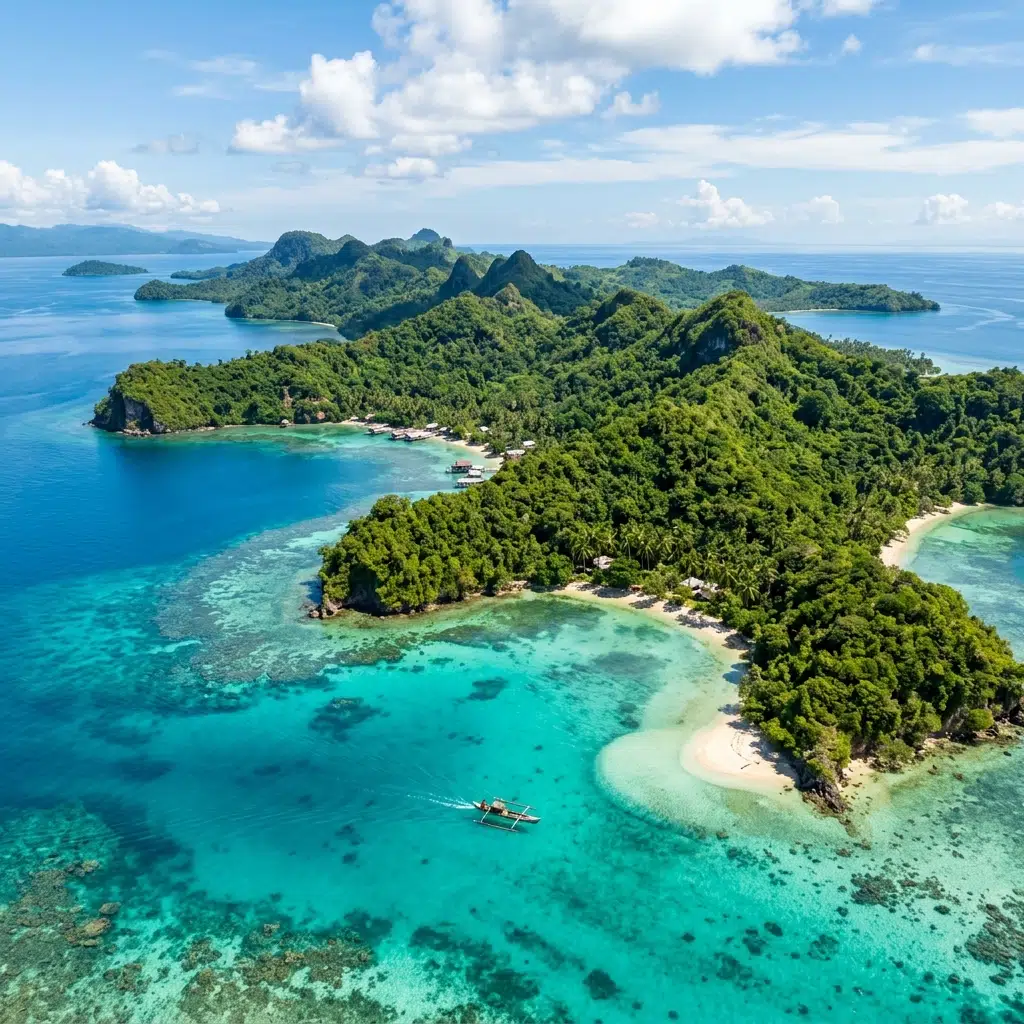
If you typed “Luwuk Banggai Islands” into Google and ended up slightly confused, that is a very normal place to start. The destination is gorgeous. The naming is messy. The online advice is often thin. And a lot of what you find reads like someone fed “hidden paradise in Indonesia” into a content machine and hit publish.
So here is the honest version. Banggai is absolutely worth the effort, but it works best when you understand what the trip actually involves. This is not Bali with fewer people. It is a remote island region in Central Sulawesi where the big rewards come with small doses of inconvenience. You will deal with boats, timing buffers, patchy internet, basic rooms, and the occasional plan that shifts because that is how island logistics work. If that sounds annoying, this might not be your place. If that sounds like a fair trade for clear water, empty beaches, freshwater lagoons, and a part of Indonesia that still feels a bit wild, you are going to like it here a lot.
The short version
Luwuk is the mainland gateway, Peleng is the island most first-timers should prioritize, and Banggai Laut is the extra layer you add when you have more time and patience for moving around.
First, what people mean when they say Luwuk Banggai
This is where a lot of blogs lose people. Luwuk is the town on mainland Sulawesi that most travelers fly into. The Banggai Islands sit offshore at the mouth of the Gulf of Tolo, between the Banda Sea and the Molucca Sea. Britannica describes the archipelago as two major islands plus roughly 100 islets, with Peleng as the largest, forested, mountainous island. In real travel language, though, people usually use “Luwuk Banggai” as a practical umbrella term for the whole trip area.
There is also an administrative wrinkle that is easy to miss. What travelers call “Banggai” often includes both Banggai Kepulauan and Banggai Laut, even though they are not the same regency anymore. For your planning, you do not need to obsess over that bureaucratic split. Just think in zones. Luwuk is your transport hub and easiest base on the mainland. Peleng is where a lot of the first-time highlights sit, including the famous destination detailed in our Paisupok Lake travel guide. Banggai Laut is where you go when you want more island-hopping, more beach time, and fewer people around you.
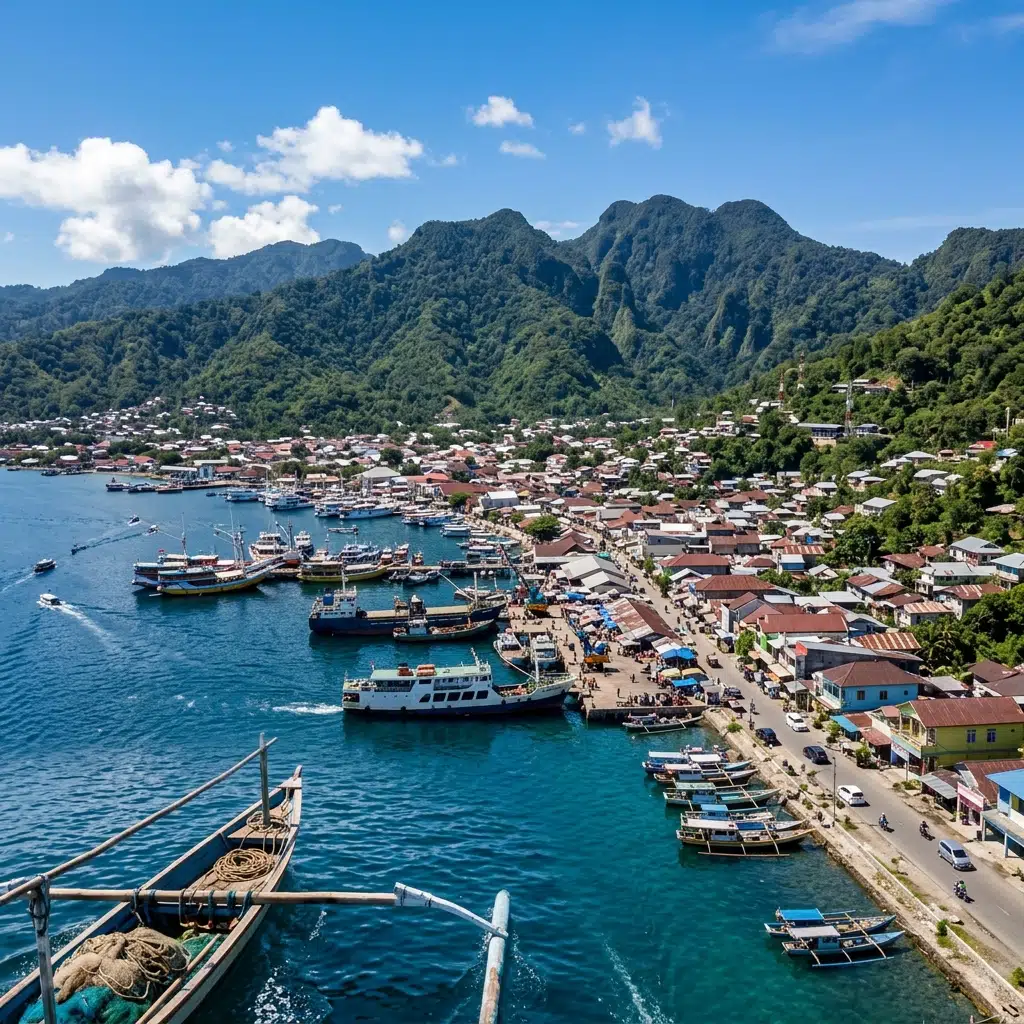
Luwuk serves as the main mainland gateway and transport hub before you cross over to the Banggai Islands.
Getting there is straightforward on paper and slightly chaotic in practice
Your entry point is Syukuran Aminuddin Amir Airport, code LUW, just outside Luwuk. There are no international flights into Luwuk, so most people connect domestically first. Current route listings show domestic links including Makassar and Jakarta, with other domestic connections changing over time, so always check the airline side again before you lock in the trip. The main thing to understand is that Luwuk is connected enough to be usable, but not so connected that you should build a fragile itinerary around perfect timing.
From Luwuk, you continue by sea. While planning your Banggai Islands Sulawesi adventure, you will find that most guides consistently point travelers toward the public ferry from Pelabuhan Rakyat or a private speedboat if you want to save time and spend more money. The ferry option is the budget move. The speedboat option is the sanity move if your schedule is tight. Either way, do not plan the trip like a city break. Give yourself buffer. Missed connections in Banggai are not glamorous travel stories in the moment. They are just long, sweaty delays with your bag beside you and very little room for negotiation.
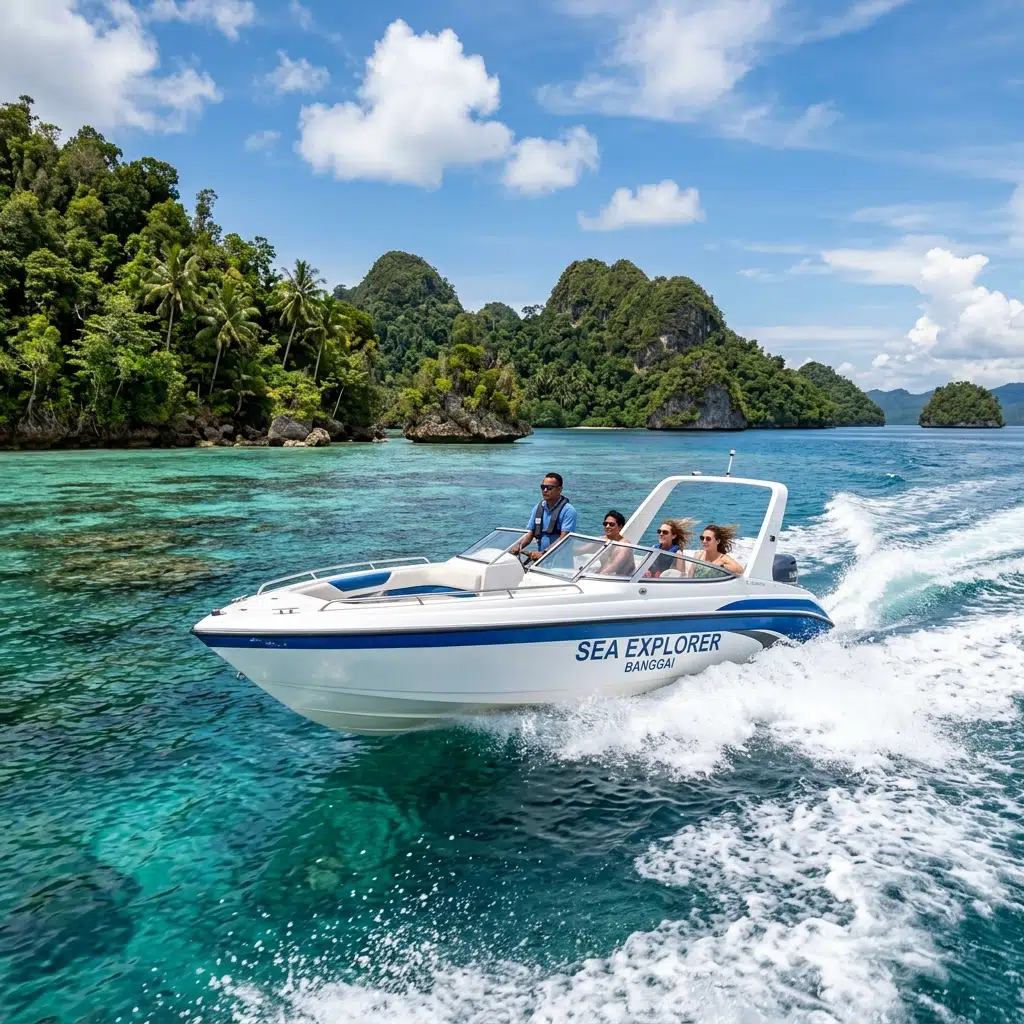
Banggai is a boats-and-buffers kind of destination. Fast boats make transfers easier, but always plan for some buffer time.
If this is your first visit, I would not try to do the whole region in three days. Five to seven days is the sweet spot if you want the trip to feel exciting rather than rushed. With four days, I would keep it simple and bias toward Luwuk plus Peleng. Once you start adding Banggai Laut on a short itinerary, the proportion of your holiday spent moving around starts getting silly.
What is actually worth prioritizing
The biggest reason Banggai works so well as a trip is range. You are not going there for one single postcard. You are going because the region keeps changing shape on you. One morning can feel like jungle travel, the afternoon can feel like a reef day, and sunset can land you somewhere so quiet it almost feels suspicious.
When mapping out the best things to do in Luwuk Banggai, Piala Waterfall is one of the easiest wins on the mainland side. It is close enough to town to fit into a light arrival or departure day and it gives you that immediate, humid, emerald Sulawesi feeling people are usually chasing. Kilo 5 Beach is another good low-effort stop. It is not the sort of place I would cross Indonesia for, but it is exactly the sort of place that makes a base day pleasant. Grab snacks, walk the shoreline, watch local life happen, and let your schedule breathe a little.
Peleng is where the trip starts feeling special. Paisupok Lake is still the headline act for good reason. The water has that unreal submerged-tree clarity that makes people think the photos are fake until they get there. Nearby places like Paisubatango Lagoon and beaches such as Poganda give you the rest of the Peleng rhythm. Swim, sit around, do very little, then move on to the next place that looks impossibly blue.

Paisupok Lake in Peleng Island features some of the clearest, bluest freshwater you will ever swim in.
Banggai Laut is the section I would treat as a bonus round unless you have enough time to do it properly. Local itineraries often push it because the island-hopping there is the classic white sand and clear bay fantasy people come for. And to be fair, it does look excellent. But the extra logistics are real. If you are the kind of traveler who enjoys moving slowly and does not panic when transport plans flex, it is worth adding. If you are on your first visit and want the highest reward-to-hassle ratio, Peleng is still the safer bet.
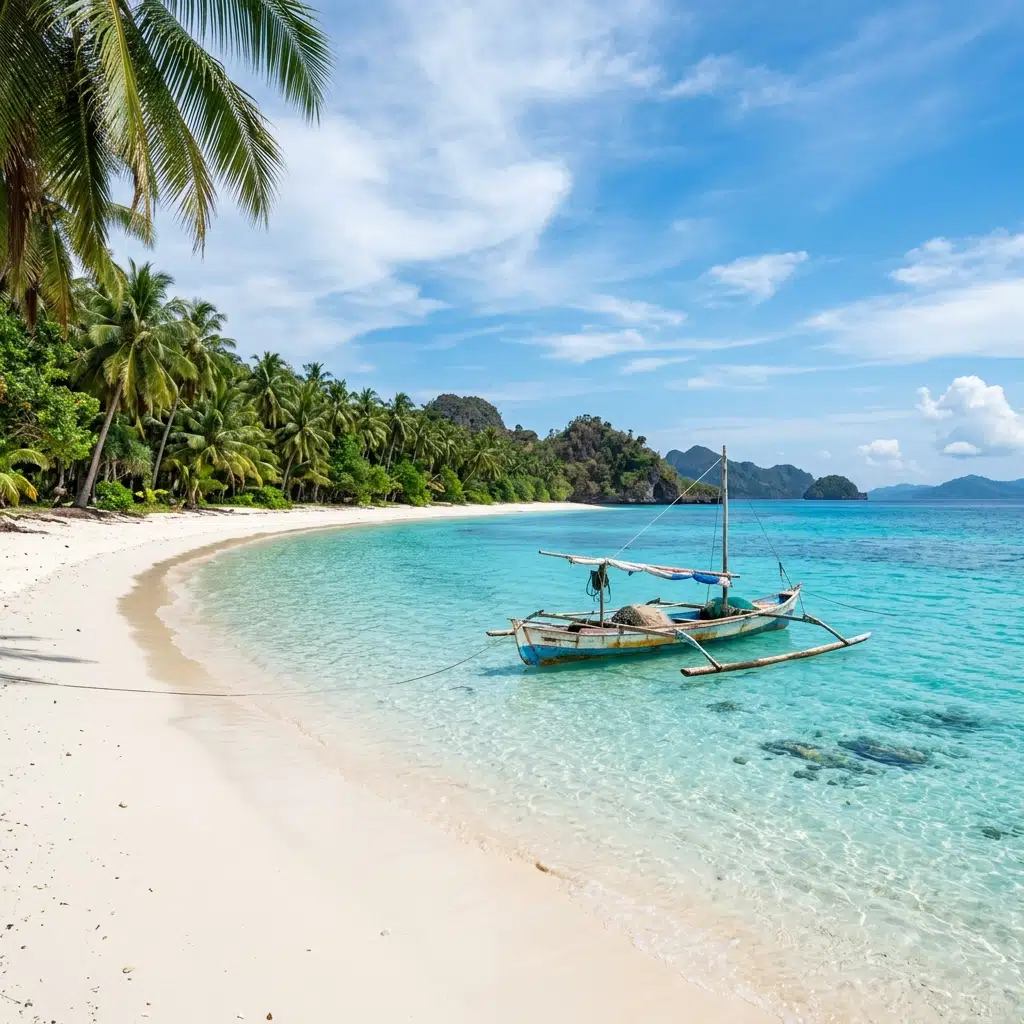
Banggai Laut offers pristine, uncrowded white sand beaches if you have the time for the extra island-hopping.
One other thing that gives Banggai more character than a generic beach destination is the wildlife story. The Banggai cardinalfish is endemic to the archipelago and is one of the region’s signature marine species. It is also under pressure, which is a good reminder that this is not just content scenery for tourists. If you are snorkeling or diving here, keep it simple. No touching coral, no chasing marine life, no stepping where you do not need to step. Banggai is still special partly because it has not yet been loved to death.

The endemic Banggai cardinalfish is a highlight for snorkelers and divers, but it requires responsible tourism practices.
When to go, and the honest answer on weather
There is no magical perfect month where Banggai becomes a guaranteed blue-sky machine. The local BMKG climate analysis for Luwuk points to relatively lower rainfall around September, October, and November, with January, February, and August also looking comparatively favorable in that dataset. At the same time, current local operators still tend to pitch June to September for calmer sea-focused itineraries. Put together, the practical takeaway is simple: late dry-season and shoulder months are usually the easiest bet, but you should still check the local forecast before any boat-heavy days.
If I were booking blind and wanted a balanced shot at decent weather plus smoother transport, I would aim for the broader August to November window and stay flexible. What I would not do is build a trip around the assumption that Indonesia has one uniform dry season everywhere. Banggai has its own mood.
The boring but important stuff most guides gloss over
This is the part that decides whether the trip feels fun or exhausting. Cash matters. A lot. Card acceptance drops off fast once you move beyond flights and a handful of bigger businesses. Basic rooms are normal. Wi-Fi is not something you should emotionally rely on. English is limited outside the tourist-facing layer. Local guides also repeatedly mention that Telkomsel is the safest mobile option if you care about staying connected.
Google Maps is useful, but it is not the boss of this destination. It will not save you from late ferries, local timing, or the fact that some of the most worthwhile places are connected by conversations rather than polished booking flows. Download what you need in advance. Save important contacts. Carry water, sunscreen, mosquito repellent, and patience. Those four things will do more for your trip than any aesthetic packing list.
It is also worth adjusting your hospitality expectations before you arrive. Banggai is not trying to be a luxury beach scene. You are more likely to stay in homestays and small guesthouses than in polished resort compounds, and honestly that is part of the appeal. The trip works best when you lean into that instead of resisting it.
Should you do it independently or book help?
You can absolutely do Banggai on your own. People do. If you have time, patience, some Indonesian, and a high tolerance for slight inefficiency, independent travel here can be very rewarding. But if your trip is short, or this is your first Indonesia island-hopping itinerary outside the usual mainstream route, I think local help is money well spent. Not because Banggai is dangerous, but because logistics can quietly eat the best part of your day.
My honest rule is this: if you have five days or less, reduce friction wherever you can. If you have longer and actually enjoy solving transport puzzles, go more DIY. Either way, sort out the transport chain early. It is the single biggest difference between a trip that feels relaxed and a trip that feels like admin with beautiful views. If you want a clearer breakdown of that decision, our review of the best tour operators in Luwuk Banggai will help.
My real take after looking at the place properly
Banggai is not the place I would send everyone. I would not send luxury travelers who need everything frictionless. I would not send people who hate transfers, hate uncertainty, or need every day to run like a spreadsheet. But for travelers who want an Indonesia trip that still feels slightly under the radar, this region has real pull.
What makes it good is not just that it is beautiful. Indonesia has no shortage of beautiful places. What makes Banggai stand out is the mix of beauty, space, and relative lack of tourism fatigue. Luwuk still feels like a working gateway town. Peleng still feels like somewhere you go, not somewhere that has already been optimized to death. And once you understand the geography and stop trying to force the trip into a Bali-style template, the whole thing starts making sense.
If you want my simplest recommendation, it is this: fly into Luwuk, give yourself more days than you think you need, prioritize Peleng, build around Paisupok rather than trying to tick every island, and leave space in the schedule for the trip to unfold a bit. Banggai rewards that kind of traveler.
If you have been to Banggai and want to share your experience or correct something here, you can always reach the folks behind this guide.